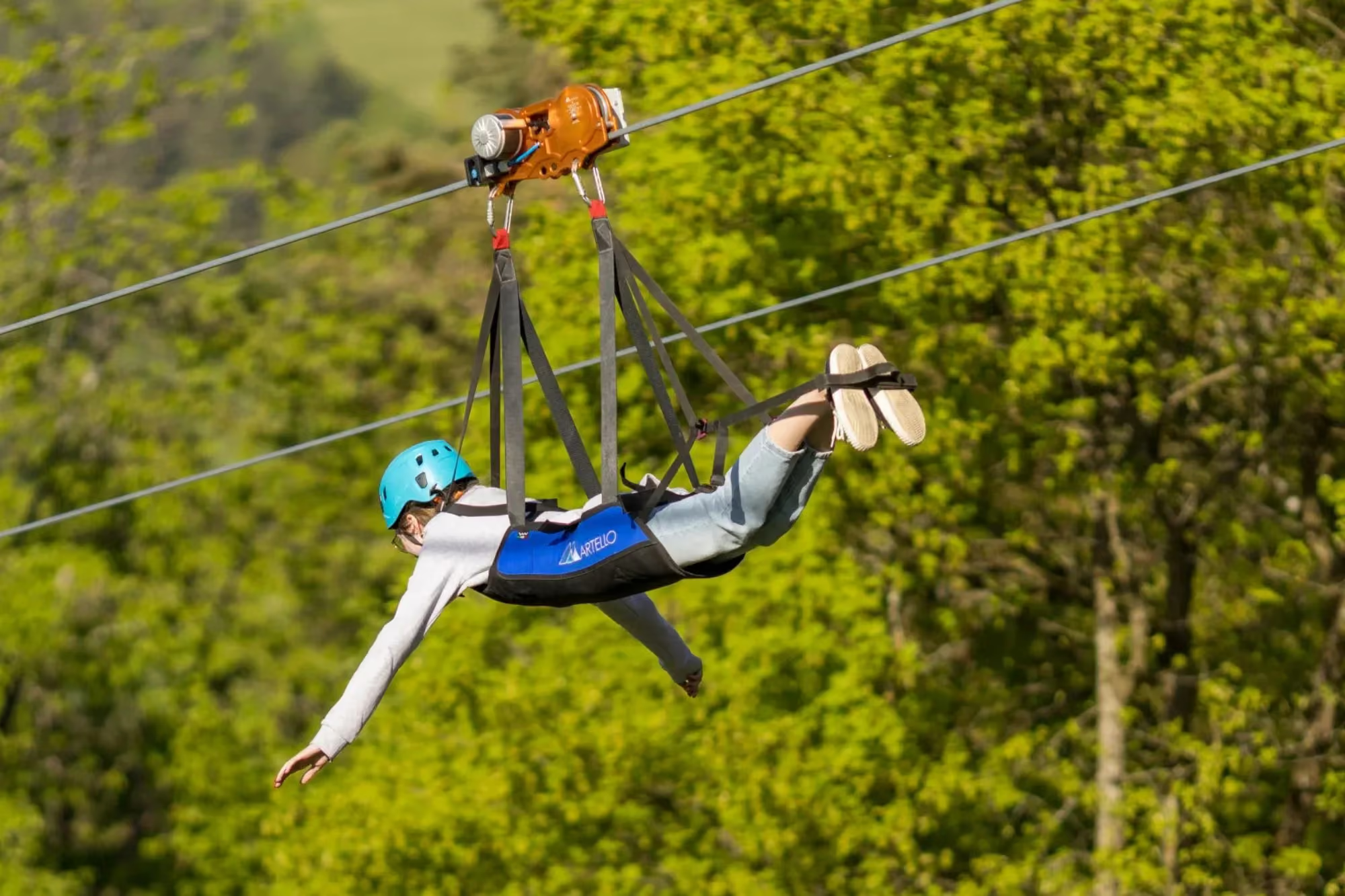
Ziplines are among the fastest-growing outdoor attractions in Europe. They offer easy thrills and stunning views. For investors, they bring a fast return and year-round operation. However, zipline design and construction, especially for lines longer than 200 m, requires experience and solid technical know-how.
Zipline design and construction is a technical challenge
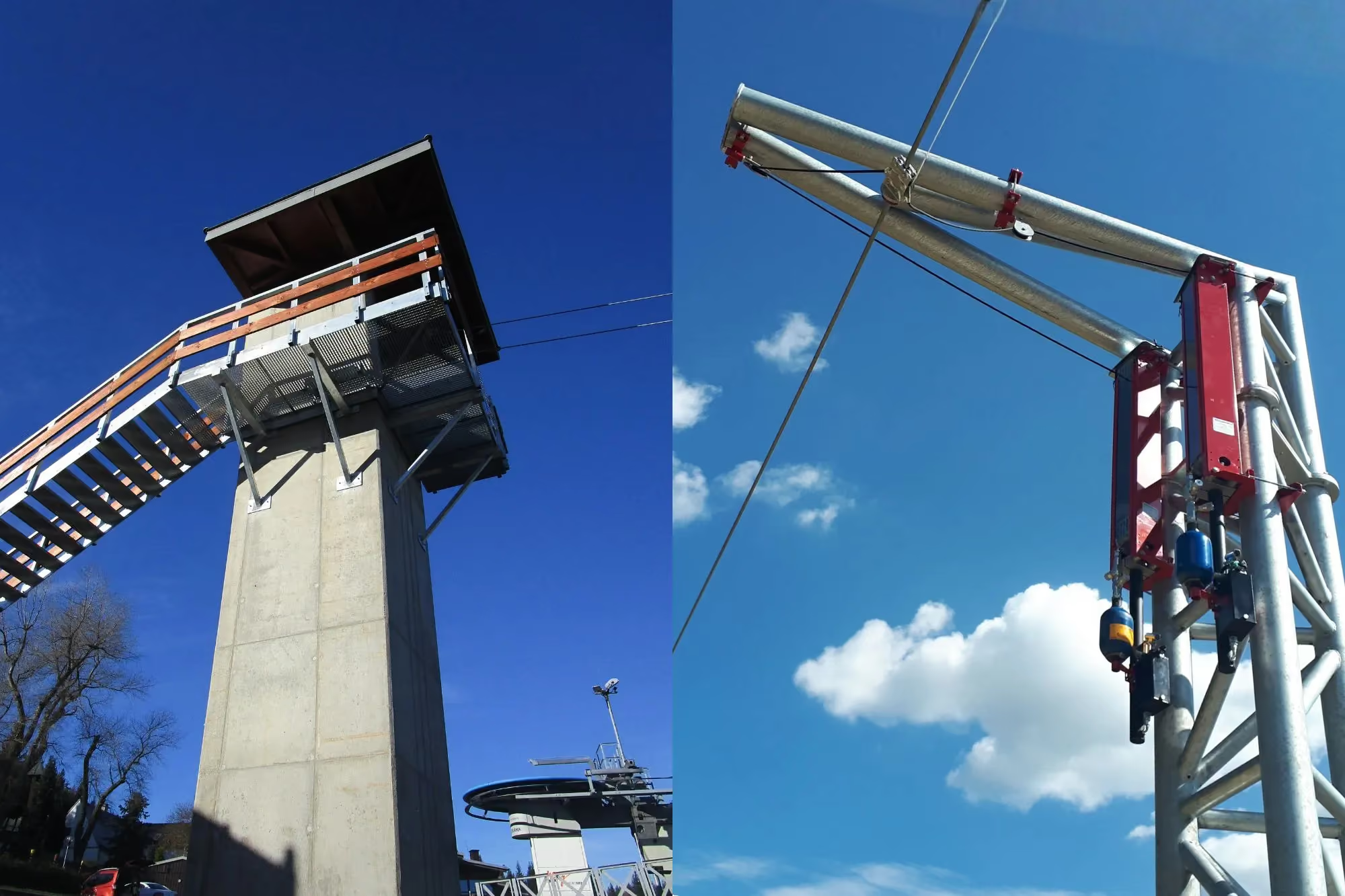
Every project starts with one key decision: where the zipline begins and where it ends. This defines the main parameters - length, cable sag, and gradient. Long ziplines are not just bigger versions of short ones. At around 200 metres, the design becomes more complex. Lines over 700 metres are a real engineering challenge. Designers must consider terrain, cable tension, air resistance, friction, wind, and icing. Start and end stations must be easy to access and allow smooth visitor flow.
Small playground ziplines usually have a gradient of 3 to 6%. Commercial lines can reach 20%, and in extreme cases even 45%. The longer the line, the steeper the slope should be. For example, a 500 m zipline needs a vertical drop of at least 30 metres (6%). At double the length, the drop should be about 110 metres (11%). The ideal cable sag is around 4%. If the cable is too tight, it can damage the system.
Design and construction process
- Feasibility study
- Documentation for a building permit, including structural calculations
- Building permit procedure
- Detailed design documentation
- Construction
- Certification and training
Ziplines are often built in remote or mountainous areas. This makes construction harder. Foundations for towers and platforms require special solutions. Helicopters and pulling systems are often used. Zipline design and construction may seem complex, but the result is worth it – visitors love the experience.
An electric trolley can solve low gradient
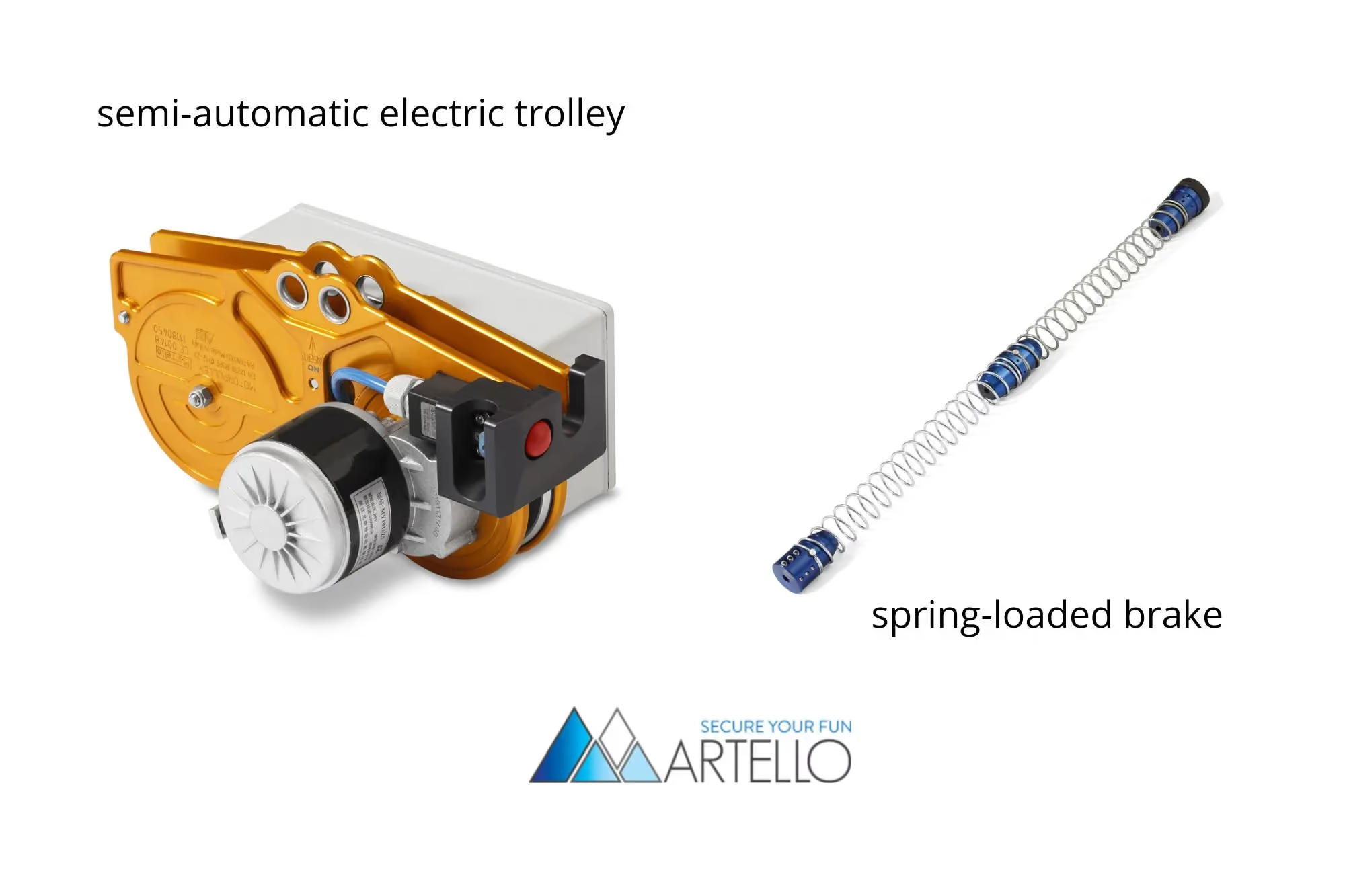
If the slope is too low, one option is to build a higher launch tower. A simpler solution is an electric trolley. It supports gravity with a motor. The ride starts on a steeper section, driven by gravity. When the slope becomes too low, the motor takes over and pulls the rider to the end. With this system, even long ziplines can work with a gradient of 5–8%. The final section can even go slightly uphill. Automatic braking systems are another key feature. They control speed and ensure safety. Options include magnetic brakes or additional systems such as hydraulic brakes with a winch or zip stops.
Why invest in zipline design and construction?
- minimal impact on the landscape
- environmentally friendly operation
- year-round use
- long lifespan with proper maintenance
- ideal for commercial use
- fast return on investment
Types of zipline attractions
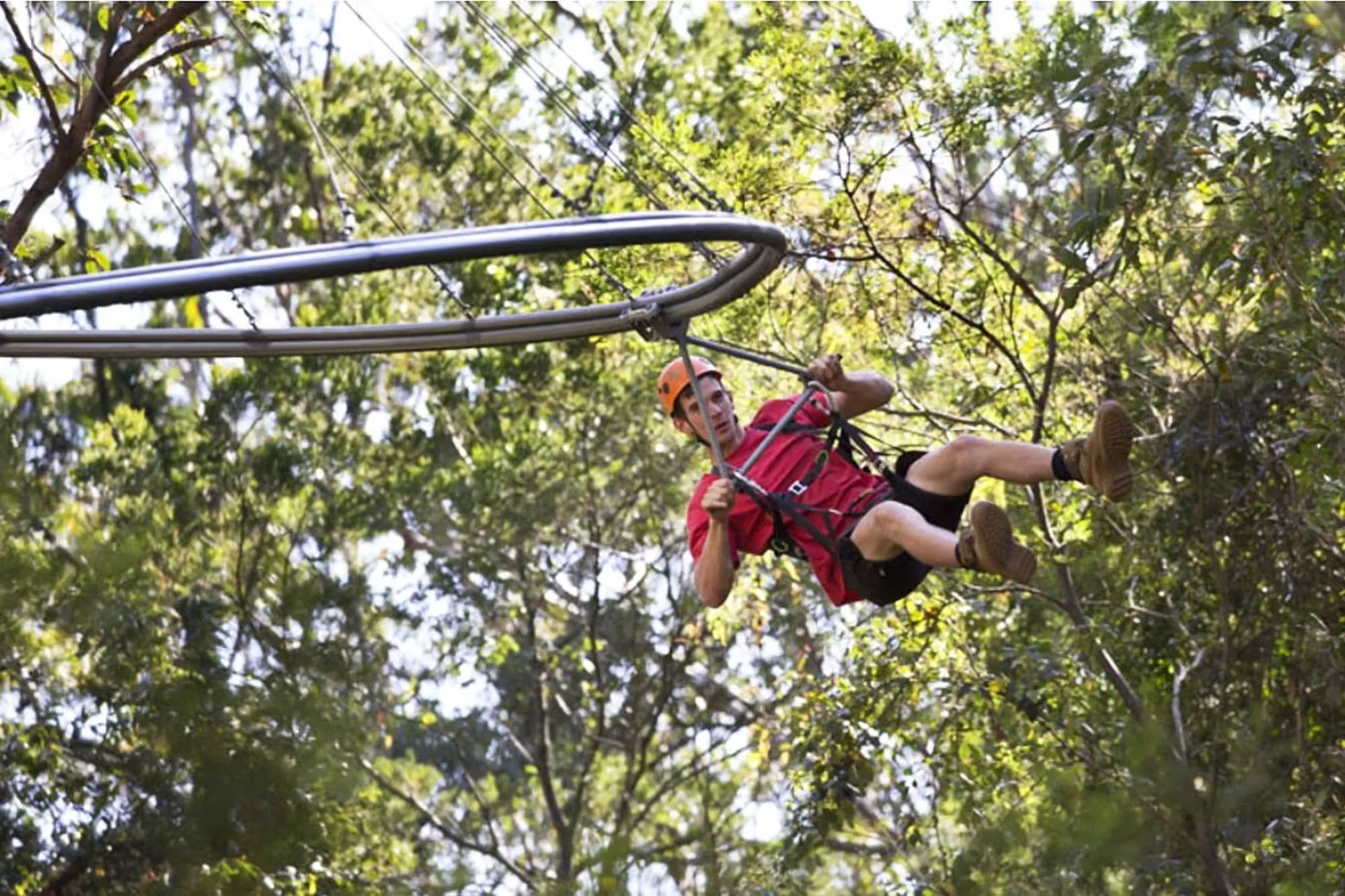
Large ziplines usually start from a tower. If terrain allows, the start can be placed at the top of a slope. Smaller lines may even start from a tree. The best ziplines in the world often combine several sections with transfer platforms. Some have parallel lines, so visitors can ride side by side. Riders can use a standard harness, a seated position, or lie face down in the “superman” position. A special variation includes tracks with curves and loops. In this case, the trolley runs on a rail instead of a cable. These attractions can even be built indoors.
What is needed to operate a zipline:
- trained staff at start and transfer points
- safety equipment and protective gear
- regular inspection and maintenance according to EN 15567
- operating rules, including extreme weather
- transport to the start point if needed
- ticket sales (not always at the start point)
The longest ziplines in Central Europe
Central Europe has nothing to be ashamed of. Zip line enthusiasts can find courses here that can easily rival some of the most exciting attractions in Europe. The three longest zip lines in Central Europe share one thing in common: Unipark was involved in the creation of each of them. In the Czech Republic and Slovakia, Unipark designed the zip lines and oversaw their construction; in Poland, it contributed to the design.
Czech Republic: Zipline Klíny
Total 2,200 m in two sections (1,400 m longest), speed up to 75 km/h → Attraction operator’s website
Slovakia: Zipline Kubínska hoľa
1,234 m, speed up to 100 km/h → Attraction operator’s website
Poland: Zipline Wańkowa
1,350 m, speed up to 70 km/h, two parallel lines, option to ride lying down → Attraction operator’s website
Summary
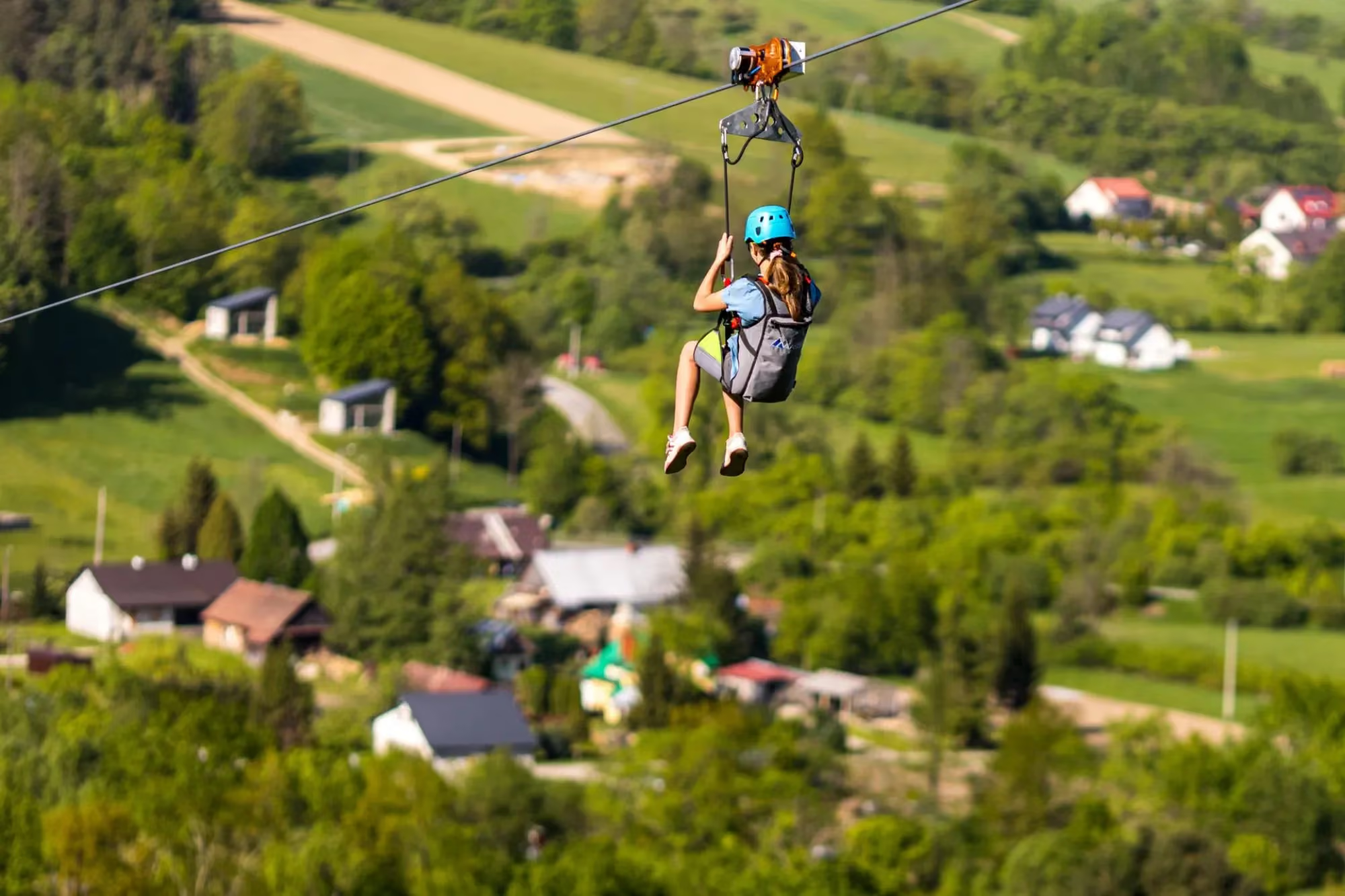
A zipline is an adrenaline attraction where a rider moves along a sloped cable using a pulley. Movement is powered by gravity or supported by an electric trolley. The rider wears a harness and protective gear such as a helmet, and sometimes gloves or goggles. Ziplines are most common in mountains, but they also work well above coastal cliffs and bays.
They are popular with visitors and attractive for operators. However, zipline design and construction has many technical aspects. You must consider length, gradient, cable sag, air resistance, tensile forces, wind, and icing. You also need the right braking system. Construction requires precise engineering, quality components, and regular maintenance. The first step is always a feasibility study.